
Contents13
- The verdict — a solid default for size-vs-capacity, but the ports are dated
- Look and size
- What worked
- The charging behaviour is steady
- Pocketable for a 10000mAh battery
- Four-LED battery indicator, no fuss
- What didn’t
- USB Type-A / micro-B I/O
- No USB PD
- Slow to refill itself
- Comparison: choosing in the 10000mAh class
- FAQ
- Verdict — still usable as a first battery, but a successor is the smarter new purchase
2026 update: Ported from the old VuePress blog. The PowerCore 10000 is an older model in 2026 — the current line has moved to USB Type-C I/O in the newer PowerCore series. The framing here (how to weigh capacity, size, and ports in the 10000mAh class) still applies.
I used the Anker PowerCore 10000 as my main mobile battery for several years, carried for the usual reason — a backup against a dead phone outside the house. The 10000mAh class strikes a workable balance between “two or three phone charges” and “small enough to carry”, which makes it an easy first battery to land on.
The I/O ports, though, are this generation’s weak spot. From a 2026 vantage point, I want to write down which parts still hold up and which parts I would no longer pick.
The verdict — a solid default for size-vs-capacity, but the ports are dated
Short answer: fitting 10000mAh into a pocketable shell still earns the recommendation. The charging behaviour is steady in the way Anker batteries usually are, which makes it easy to trust as an outing backup. The catch is the USB Type-A input and micro-B output — that pairing does not match the cables most people already carry in 2026.
The reason is simple: phones, laptops, and wireless earbuds have been converging on USB Type-C. For anyone trying to standardise on a single Type-C cable, packing a dedicated micro-B cable just for this one battery is hard to justify.
A few cautions before buying:
- You want to standardise on USB Type-C cables: a Type-C version of the same series is the cleaner choice
- You want to charge a laptop with PD (Power Delivery): this unit tops out at USB-A / 2.4A and does not support laptop fast-charge
- You are buying brand new: the current Type-C successor will keep working with the rest of your gear for longer
Look and size
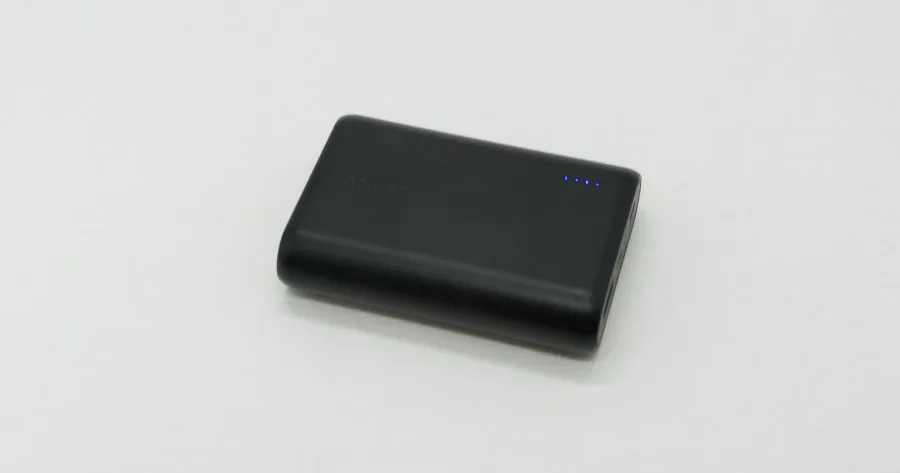
Short answer: compact for a 10000mAh battery. Anker traded height for thickness, so it still slips into a jeans pocket.
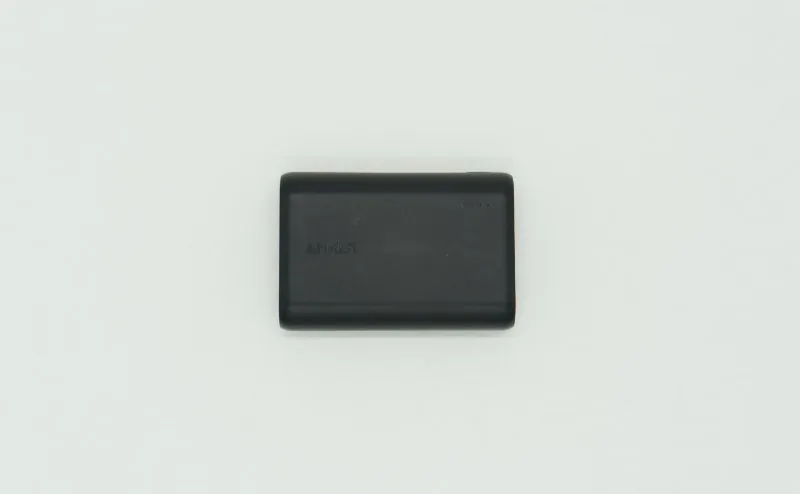
The shell is matte black, the same finish Anker uses across the mobile battery range, and it hides fingerprints and minor scuffs well.
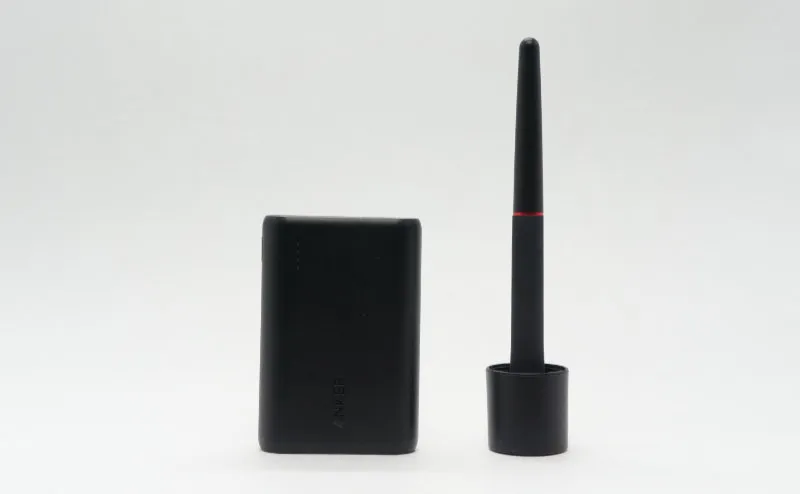
Stated specs are below (source: as printed on the packaging).
| Spec | Value |
|---|---|
| Size | ~92 x 60 x 22mm |
| Weight | ~180g |
| Capacity | 10000mAh |
| Output | Up to 2.4A (PowerIQ) |
| Input port | USB Type-A |
| Output port | micro-B |
180g is about average for the 10000mAh class. The short height means it sits well in a closed hand.
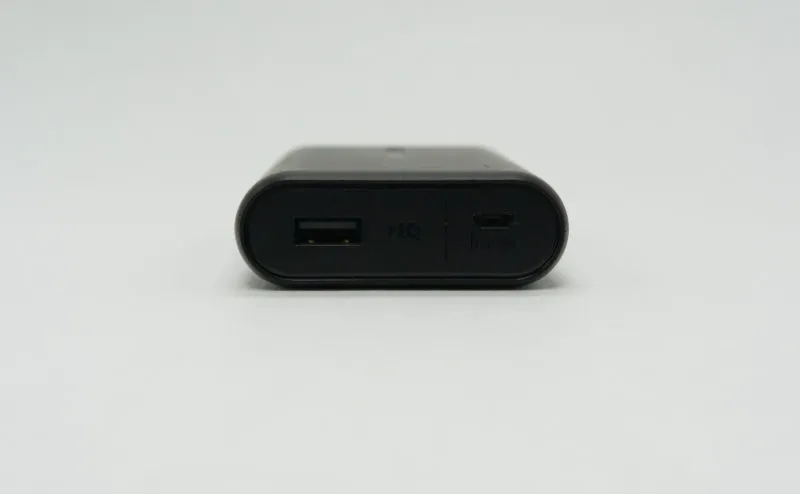
The battery charges over USB Type-A and outputs over micro-B. At the time of writing (2021), USB Type-A was the default everywhere. In 2026 the layout reads as an older generation.
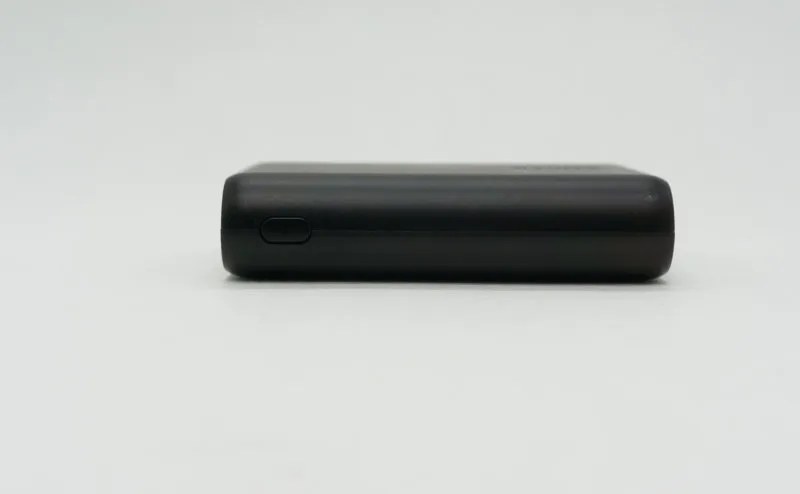
The power button is on the side. A single press lights four blue LEDs that show the remaining charge. Plug in a phone, press the button, and it starts pushing power — there is nothing to think about.
What worked
Short answer: Anker’s reliable charging behaviour and a genuinely pocketable 10000mAh form factor.
The charging behaviour is steady
I have owned several Anker batteries and never run into power cutting out mid-charge or the device failing to register. For a battery that gets plugged and unplugged constantly throughout the day, that kind of quiet reliability matters more than a spec sheet.
Anker’s own PowerIQ (current adjustment based on the connected device) seems to do its job within the 2.4A range — though this is based on day-to-day use rather than measured output.
Pocketable for a 10000mAh battery
10000mAh covers about two to three phone charges, or just under one full tablet charge. Fitting that into a pocketable shape was the headline at launch and still is.
On a day out without a bag, it goes in a jacket or back pocket and lasts the day.
Four-LED battery indicator, no fuss
One button press, four LEDs. There is no app, no Bluetooth pairing — and as a result, no ambiguity about how much is left. It is hard to walk out the door with a battery you thought was full but wasn’t.
What didn’t
Short answer: USB Type-A / micro-B ports, no PD support, and slow input charging.
USB Type-A / micro-B I/O
Normal in 2021, a clear weakness in 2026. If your cable kit is already standardised on USB Type-C, carrying a micro-B cable just for this one battery starts to feel like overhead.
For a new purchase I would point people at the Type-C version of the same line (PowerCore III 10000 or similar).
No USB PD
The output is a single USB-A port at up to 2.4A — no USB Power Delivery (PD).
That rules out fast-charging a recent phone, or driving a laptop or tablet at any useful speed. As a topping-up battery for a phone it is still fine.
Slow to refill itself
Charging the battery itself is over micro-B, and even on the bundled wall adapter, it feels slow to reach full.
Plug it in before bed and it is ready in the morning, which is the usual pattern. As a “top up just before leaving” battery, it is not the right tool.
Comparison: choosing in the 10000mAh class
10000mAh is the capacity most people land on for a first battery. A short way to compare options inside that class:
| Angle | PowerCore 10000 (this unit) | Type-C PowerCore successor | 20000mAh class |
|---|---|---|---|
| Ports | USB-A / micro-B | USB-C in/out | Varies by model |
| Weight | ~180g | ~190g (rated) | ~350g |
| Capacity | 10000mAh | 10000mAh | 20000mAh |
| Best for | 2–3 phone charges | Phone + light tablet | Phone + laptop |
| Launch price (at time of writing) | ~2,500–3,500 yen | ~3,500–5,000 yen | ~5,000–8,000 yen |
The decision is short: “do I want everything on Type-C?” and “do I need to charge a laptop?” Two no’s and this class is enough. One yes and a different model fits better.
FAQ
Q. Does it work with both iPhone and Android? A. Yes. The output is USB Type-A, so as long as you carry the right cable for your device (Lightning / USB-C / micro-B), either side works. There is one USB-A output port on the battery.
Q. Can I take it on a plane? A. Carry-on, yes. 10000mAh works out to roughly 37Wh, comfortably under the 100Wh limit major airlines apply (airlines and routes vary, check the current rules for your specific flight). Checked baggage is not allowed.
Q. How many times can it charge a phone? A. Depends on the phone’s battery and charging losses, but for a 3000–4000mAh phone, two to three full charges is the practical figure. The four-LED indicator gives you a rough sense of what’s left as you go.
Q. Can it charge a laptop? A. Not really. The output is USB-A at 2.4A with no USB PD, so it does not meet the fast-charge requirements of most laptops. For a laptop, look at a PD-capable battery with at least 30W output.
Verdict — still usable as a first battery, but a successor is the smarter new purchase
As a default in the 10000mAh class, it is still easy to live with. Anker’s steady charging behaviour and the palm-sized shell make it a quiet, dependable backup when leaving the house.
For a fresh purchase in 2026, though, the Type-C versions of the current line will hurt less in the long run, simply because everything else you carry is already on Type-C.
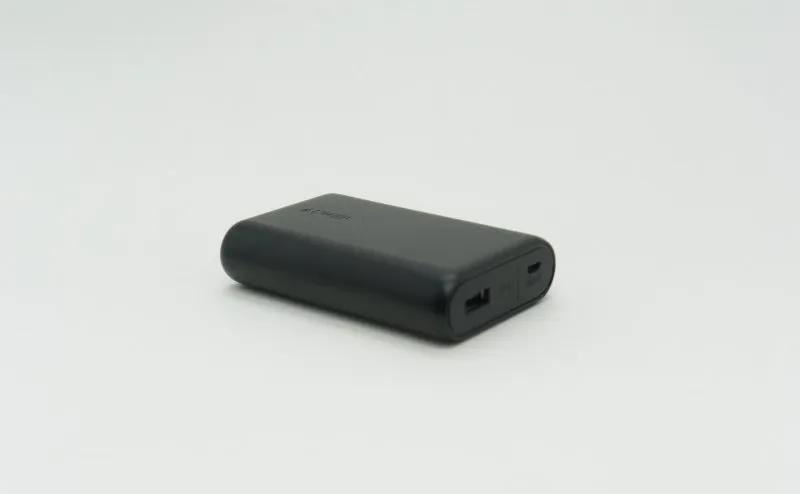
If you already own a PowerCore 10000, there is no reason to retire it — keep a micro-B cable in the bag and carry on. When it does come time to replace it, the Type-C successor is the obvious next stop.